
How to Test Subject Lines Without Overthinking It
A simple way to improve opens without getting stuck in “what if”


Why Subject Lines Matter More Than You Think
Most emails aren’t ignored because the content is bad. They’re ignored because they’re never opened in the first place.
That puts a surprising amount of weight on a single line of text. Your subject line isn’t just a label or a preview. It’s the decision point. It’s the moment where someone decides whether to give your email a few seconds of attention or move on to something else entirely. If it doesn’t catch their interest or feel relevant enough, the rest of your email never gets a chance.
The important thing to understand is that small changes here can make a noticeable difference. You don’t need a completely different strategy or a dramatic rewrite. Sometimes the shift from one angle to another is enough to change how your email is received.
Why Most People Don’t Test Their Subject Lines
Even though subject lines matter, most people don’t spend much time testing them in a meaningful way.
Part of the problem is overthinking. It’s easy to sit there trying to find the “perfect” wording, tweaking phrases, second-guessing every choice, and still feeling unsure when it’s time to hit send. That pressure tends to slow everything down and make the process feel heavier than it needs to be.
There’s also the assumption that testing requires tools or technical setups. When people hear “A/B testing,” they picture dashboards, software, and systems that feel more complicated than their current workflow. If it feels like extra work, it often doesn’t happen at all.
Underneath all of that is a simpler issue. Most people aren’t sure what to test in the first place, so they either change everything at once or nothing at all. Both approaches make it hard to learn what’s actually working.
A Simple Way to Start Testing
Testing your subject lines doesn’t have to be complicated. In fact, it works better when it isn’t.
The easiest way to approach it is to change one thing at a time and keep everything else the same. You’re not trying to reinvent your emails. You’re just looking at one small shift and seeing how it performs.
That shift can be as simple as choosing between curiosity and clarity. One version hints at something and invites the reader to open the email to find out more. The other tells them exactly what they’ll get and makes the value obvious right away. Both approaches can work, but they work differently.
You can also experiment with length. A shorter subject line can feel direct and easy to process, while a slightly longer one gives you room to be more specific. Or you might test a statement against a question, where one feels more confident and the other sparks curiosity.
The key is to write two versions, not ten. Keep it simple, make a choice, and move forward.
What This Looks Like in Practice
This doesn’t need to be complicated or clever. In most cases, you’re working with the same idea, just presented in two slightly different ways.
For example, you might write a subject line like “Your posts aren’t the problem” and pair it with a variation like “Why your posts aren’t getting results.” Both are pointing to the same idea, but they frame it differently. One makes a statement, while the other opens a loop.
Or you might compare something like “A simple way to grow your list this week” with “Grow your list this week (without more content).” One is straightforward, while the other adds a specific angle that might stand out more to your audience.
These aren’t drastic changes. They’re small shifts in wording and positioning, but those small shifts are exactly what you want to test.
How to Test Without Any Tools
You don’t need special software to start learning from your subject lines.
One of the simplest approaches is to alternate styles across your emails. If one week you lean more toward curiosity, the next week you might try a more direct, clarity-based approach. Over time, patterns start to emerge, and you’ll notice what tends to perform better.
Another option is to resend an email with a different subject line. If you have people who didn’t open the first version, sending it again with a new subject line gives you a second chance to see how that change affects opens.
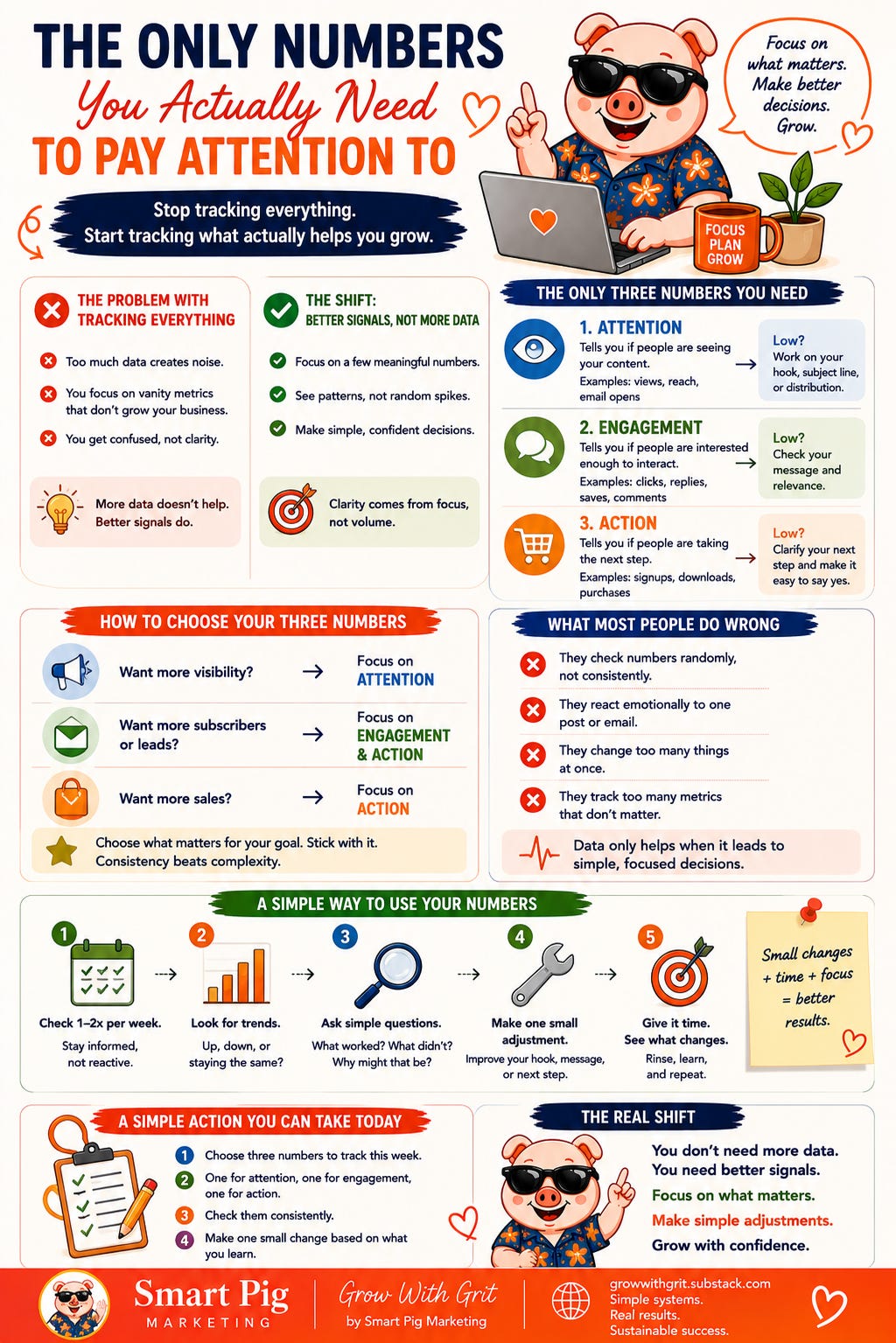
You can also pay attention to patterns across your recent emails. Instead of focusing on one result, look at several sends and compare how different styles perform over time.
The goal isn’t perfect testing conditions. It’s direction.
What to Pay Attention To
When you start testing, it’s easy to assume you should only look at which subject line gets the most opens. That’s part of it, but it’s not the whole picture.
You also want to notice which subject lines feel easier for you to write. If something feels natural and consistent with your voice, you’re more likely to use it regularly, which makes your overall content more consistent.
It’s also worth paying attention to how well the subject line matches the email itself. A subject line that gets opens but doesn’t connect with the content can lead to a drop in engagement later. The goal is alignment, not just attention.
Over time, you’ll start to see patterns in what works for your audience and what fits your style. That’s where the real value comes from.
Avoid This Common Trap
One of the easiest mistakes to make is reacting too quickly to a single result.
If one subject line performs better than another, it’s tempting to assume you’ve found the answer and change everything moving forward. In reality, one data point doesn’t tell you much on its own. What matters is the pattern that forms over multiple emails.
It’s also easy to drift into chasing trends that don’t fit your voice. Just because a certain style works for someone else doesn’t mean it will feel right for you or resonate with your audience.
Testing works best when it stays simple and consistent. You’re not looking for a shortcut. You’re building understanding over time.
A Simple Action You Can Take Today
For your next email, write two subject lines.
Don’t overthink them. Choose one small variation, make your decision, and send the email. Then save the second version and come back to it later, either in another email or as part of a resend.
That’s enough to start learning.
Why This Works
When you simplify testing, you remove the pressure to get everything right.
Instead of guessing or second-guessing, you start paying attention. You make small adjustments, you see what happens, and you build a clearer sense of what resonates with your audience.
Over time, those small insights add up. Your subject lines get stronger, your open rates improve, and the whole process starts to feel easier and more natural.
You don’t need perfect subject lines.
You just need a simple way to get better at writing them.